
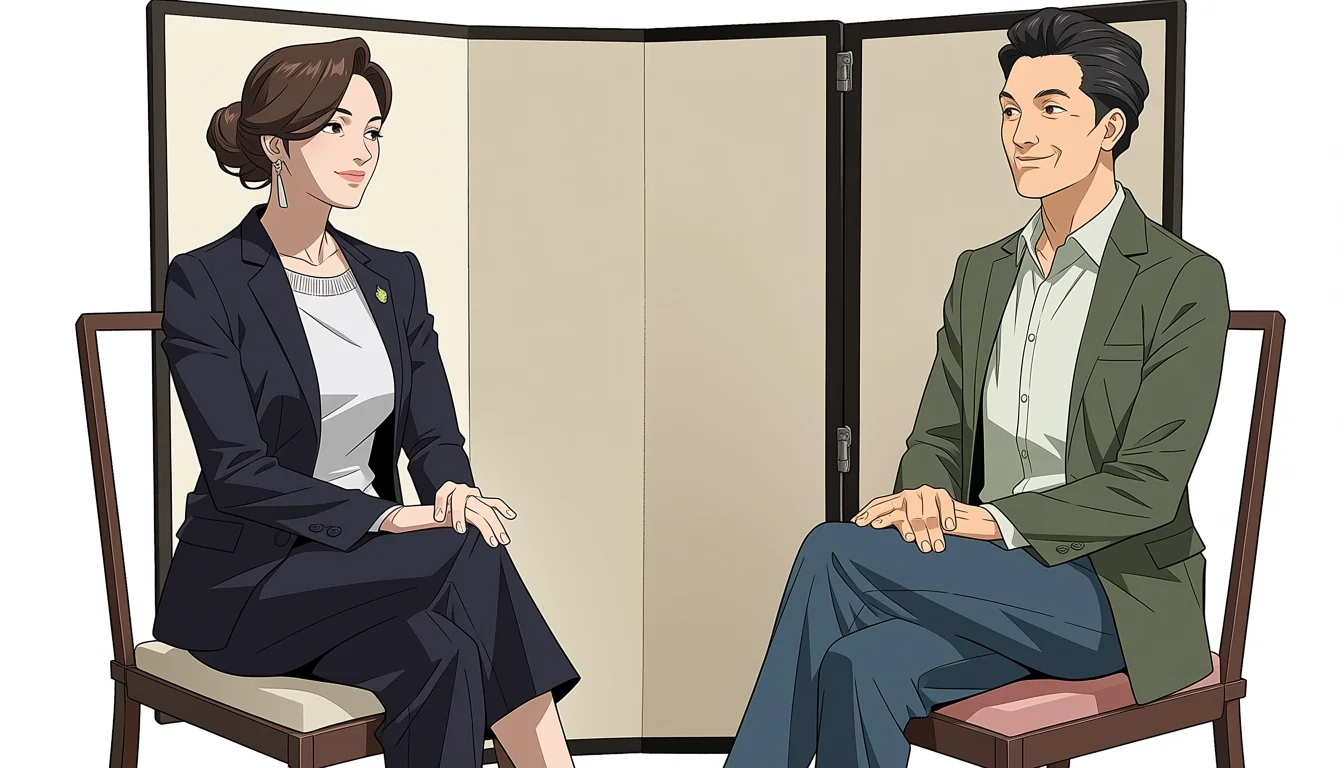
The old label for this page was brief, but the useful subject is recruiting adult creative collaborators. Hentai Shinshi approaches it as a composed editorial problem. The aim is to make roles, pay, rights, privacy, and content limits plain before any sensitive work begins. Nothing here asks for explicit material. Every character is fictional, unrelated, and unmistakably adult. Consent must be voluntary, specific, readable, and open to change. Those limits are part of the craft brief, not fine print added after an image is complete.
Picture a small independent project hiring an adult writer, illustrator, colourist, and editor. A fixed situation keeps the lesson practical. It lets you ask what the viewer can truly see, which facts belong in supporting notes, and which claims the image cannot make. The salon values restraint because a selective frame often gives gesture, space, and consequence more weight. Restraint also makes it easier to notice when a scene depends on a borrowed design, vague age, hidden pressure, or a real person's likeness.
Define the question before making
Write one sentence that names the change the scene must show. Then name the adults, their separate aims, the place, and the limit that cannot be crossed. This plain brief is more useful than a pile of style words. It tells an illustrator what to stage and gives an editor something that can be checked. The method in composing with purposeful interval is helpful here: leave enough room for a choice to register before filling the frame with detail.
For this subject, good evidence includes written scope, verified adult participants, named decision rights, a payment schedule, and a safe exit route. Evidence is a visible fact, not a mood label. A door left open can show a route. A hand held back can show a pause. A changed eye line can show attention moving. None of those marks proves consent by itself, so words, prior agreement, and responsive action must support the reading. The scene should still make sense when decorative finish is removed.
Build a small evidence-led plan
Collect references by duty. One may answer how a sleeve folds, another how late light crosses a room, and another how two adults occupy space without mirroring each other. Keep the source, artist, date, and reason for each item. The courteous reference-board method separates questions so one admired picture never becomes a hidden blueprint. Study principles; do not trace, copy a protected character, or imitate a living artist's signature surface.
A common failure is using a friendly chat as a substitute for a brief and written agreement. Prevent it with three small versions rather than one large commitment. Change one variable at a time. If you test camera distance, hold the setting, wardrobe, and light steady. If you test colour, keep the value pattern stable. Place the versions beside the brief and write what each one clarifies or obscures. A reason written in ordinary language is a better selection tool than excitement over novelty.
Work in readable stages
The practical method is to publish the role honestly, screen portfolios without collecting needless private data, and confirm terms in writing. Use stages that can be approved separately. First check premise and adult characterization. Next check silhouette, spacing, and viewpoint. Then check gesture, expression, value, and continuity. Colour and finish come later. This order catches a weak premise before hours of rendering make everyone reluctant to change it. It also gives collaborators a calm point at which to stop.
- State the scene's one required change.
- Confirm fictional adult age, free consent, originality, and privacy limits.
- Make three small studies with one changing variable.
- Choose with written evidence and record the rejected reason.
- Finish only after a cold reader understands the intended beat.
Try this studio exercise: draft a one-page call that states the audience, duties, pay, rights, boundaries, dates, and contact route. Keep the result private unless every source and permission is clear. If you use generation, editing, billing, or account tools, those actions stay with the clearly credited modern atelier instruments and its own safeguards. This salon provides criticism and study notes; it does not pretend that an outside gallery or creation service belongs to this tenant.
Review craft, ethics, and privacy
Run separate reviews for story, safety, and delivery. Mixing them into one quick glance makes easy cosmetic fixes crowd out serious questions. Ask a reader who did not see the brief to describe the adults' apparent ages, aims, relationship, freedom to pause, and the focal change. If the answers depend on a caption that repairs what the picture implies, revise the picture or premise.
| Pass | Question | Evidence to keep |
|---|---|---|
| Story | What changes in the scene? | Brief and chosen thumbnail |
| Adults | Does every figure read as mature? | Design notes and cold read |
| Consent | Can each adult choose, pause, and stop? | Agreement and visible response |
| Source | Is every study credited and transformed? | Source record and process notes |
| Privacy | Who truly needs access? | Access list and removal date |
Delete needless personal data, secret links, unused exports, and duplicate review copies. Keep the files needed to prove permission and authorship, but do not confuse record keeping with permanent collection. The site's terms observed beyond the gate explain the reader-facing boundary. Private creation and account handling remain on Manhwa.xxx, where authentication, credits, moderation, and safety checks stay in force.
Recruiting Adult Creative Collaborators With Care
Return to recruiting adult creative collaborators with the finished checks in view. You should now be able to name the purpose, point to visible evidence, explain the adult and consent safeguards, identify every source, and say why the selected version serves the scene. If one answer is missing, more polish is not the cure. Go back to the smallest stage where the missing decision can still be changed cleanly.
The intended result is a professional team that knows what it is agreeing to make. That standard leaves room for taste. It does not require every artist to use the same line, palette, pace, or degree of quiet. It asks only that choices have reasons and that adult safety, consent, authorship, and privacy remain legible. A discreet salon earns trust through those repeated habits: a clear brief, a small plan, a courteous source trail, a cold read, and a stopping point chosen before fatigue takes over.